February at Common Good: Coffee, Creativity, and San Diego Museum Month
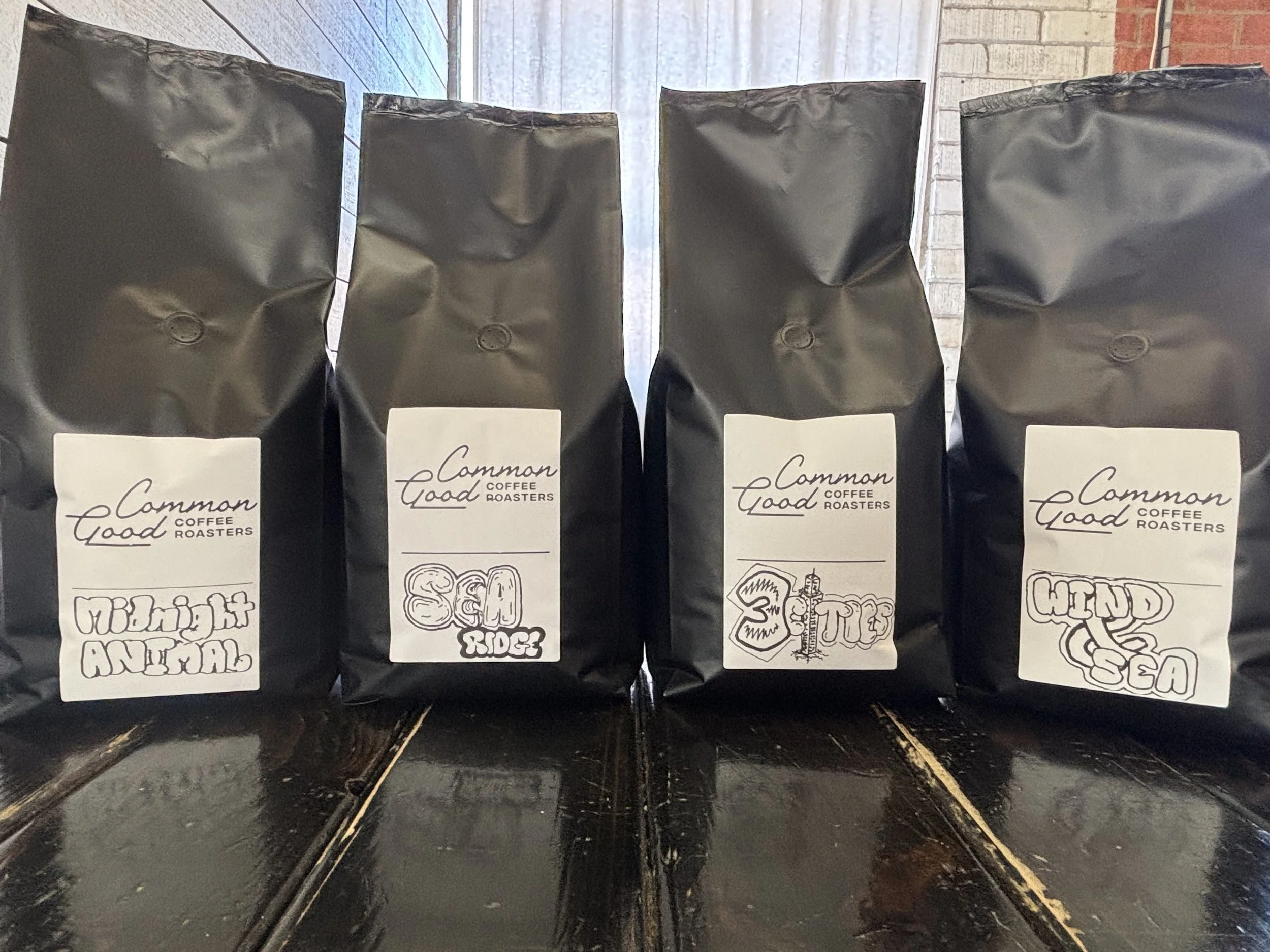
February is San Diego Museum Month, when museums across the county offer discounted admission to explore art, culture, and history. See how Common Good Coffee is celebrating with limited-time hand-sketched coffee bag designs inspired by local creativity.
February is San Diego Museum Month, a countywide celebration that makes art, culture, and history more accessible through deeply discounted museum admission all month long. Led by the San Diego Museum Council, this annual event invites locals to explore the creative and historical spaces that make our region unique.
From world-class art at the San Diego Museum of Art to hands-on discovery at the Fleet Science Center and the historic decks of the USS Midway Museum, there’s something for everyone to experience.
You can explore contemporary exhibitions at the Museum of Contemporary Art San Diego, dive into nature and science at the San Diego Natural History Museum, or visit family-focused spaces like The New Children’s Museum and the beautifully curated Mingei International Museum.
This month is a reminder that creativity should be accessible — and celebrated.
Coffee Meets Creativity
At Common Good Coffee, we wanted to celebrate Museum Month in a way that felt authentic to who we are.
For February, our wholesale coffee bags are getting a temporary artistic refresh. Our youngest team member, Silas, hand-sketched our labels to give them a playful, imperfect, and creative look. It’s a small nod to students, artists, and the importance of fostering creativity in everyday life.
The redesign is intentionally temporary. It’s about process over polish — encouraging curiosity, exploration, and supporting the arts in our city.
If you spot one of our hand-sketched bags this month, consider it an invitation.
Grab a coffee. Visit a museum. Explore something new in San Diego.
Investing in Our Community: Supporting Collier Park’s Revitalization
We’re proud to have supported Collier Park’s revitalization during its fundraising stages, helping bring new playgrounds, pickleball courts, and nature trails to our community! 🏞️✨
Your support of Common Good Coffee fuels more than just great coffee—it helps us invest in places that bring people together. Stop by 4401 Palm Ave, La Mesa and check out the upgrades!
At Common Good Coffee, we believe in using our success to give back. That’s why we proudly supported Collier Park’s renovation during its fundraising stages, helping bring vital improvements to this beloved community space in La Mesa.
As the city’s oldest park, Collier Park has long been a gathering place for families, friends, and outdoor enthusiasts. The recent $4.5 million revitalization project, funded through park fees, grants, and community donations—including ours—has transformed the park with: • A new playground and fitness equipment • Lighted tennis & pickleball courts • Nature trails & amphitheater • Shaded picnic areas & improved parking
We’re honored to have played a role in this transformation, ensuring Collier Park remains a welcoming place for generations to come.
Visit 4401 Palm Ave, La Mesa, CA to experience the upgrades firsthand, and thank you for supporting businesses like ours that reinvest in the community!
Why We're Committed to Motors for Minds: Highlighting the Mental Health Needs of Firefighters
Compared to the general population, firefighters have a 40% higher likelihood of suicide and a 20-30% likelihood of developing PTSD, versus just 6.8% for the general population.
Justin is a firefighter here in San Diego. I first met Justin through our sons, Sam and Wyatt, who became friends in kindergarten. Through our casual conversations, I learned about his nonprofit organization, Motors for Minds, and the serious mental health challenges faced by firefighters. I was shocked to discover the extent of PTSD and suicide among firefighters. Compared to the general population, firefighters have a 40% higher likelihood of suicide and a 20-30% likelihood of developing PTSD, versus just 6.8% for the general population.
These statistics opened my eyes to the significant mental and emotional toll that firefighting takes. Beyond the obvious physical dangers, firefighters face mental stress from rescuing people, sleep deprivation, and exposure to hazardous substances. These factors contribute to the alarming mental health crisis among first responders.
Recognizing the importance of this cause, I knew we needed to support Justin and Motors for Minds. This marked the beginning of CGC's commitment to supporting this vital initiative. Justin, thank you for your service and for raising awareness about the mental health needs of our local heroes.
If you would like to get involved or support the cause, visit Motors for Minds.
How It All Started
At the heart of CGC’s mission is a commitment to sharing knowledge about coffee sourcing and production, ensuring fair compensation for coffee producers, and creating an inclusive coffee culture. This philosophy is embodied in their tagline, "Coffee for the Common Good," which sets CGC apart in the industry.
In 2015, childhood friends Patrick Neal and Ryan Beagley-Reiner founded Common Good Coffee Roasters (CGC) in San Diego, California. They were driven by a simple goal: to make truly great coffee more accessible and to ensure that everyone involved in its production benefits.
Reflecting on their motivation, Ryan said, “We saw that many small, owner-operated cafes and restaurants were serving coffee that lacked flavor, uniqueness, and transparency regarding its origin. Having roasted at home and researched the coffee supply chain, I realized we could offer something better.”
Combining their experience in both large coffee corporations and specialty coffee, Pat and Ryan aimed to bridge the gap between the two. CGC strives to deliver the convenience of mainstream coffee with the quality, transparency, and ethics of specialty coffee.
At the heart of CGC’s mission is a commitment to sharing knowledge about coffee sourcing and production, ensuring fair compensation for coffee producers, and creating an inclusive coffee culture. This philosophy is embodied in their tagline, "Coffee for the Common Good," which sets CGC apart in the industry.
To achieve superior quality, CGC partners with specialty coffee importers and cooperatives to source green coffee beans that exceed specialty standards. Each batch of coffee is roasted with precision to highlight its unique flavors, resulting in a product that delights consumers.
Beyond being a coffee company, CGC is dedicated to philanthropy, believing that good coffee should benefit all stakeholders, from farmers to customers. CGC supports various non-profits and encourages collaboration on meaningful causes, emphasizing the power of collective efforts.
Recognizing the important role of coffee shops in shaping consumer experiences, CGC is more than just a supplier; it is a partner in excellence, providing quality coffee that stands out in taste and ethics.
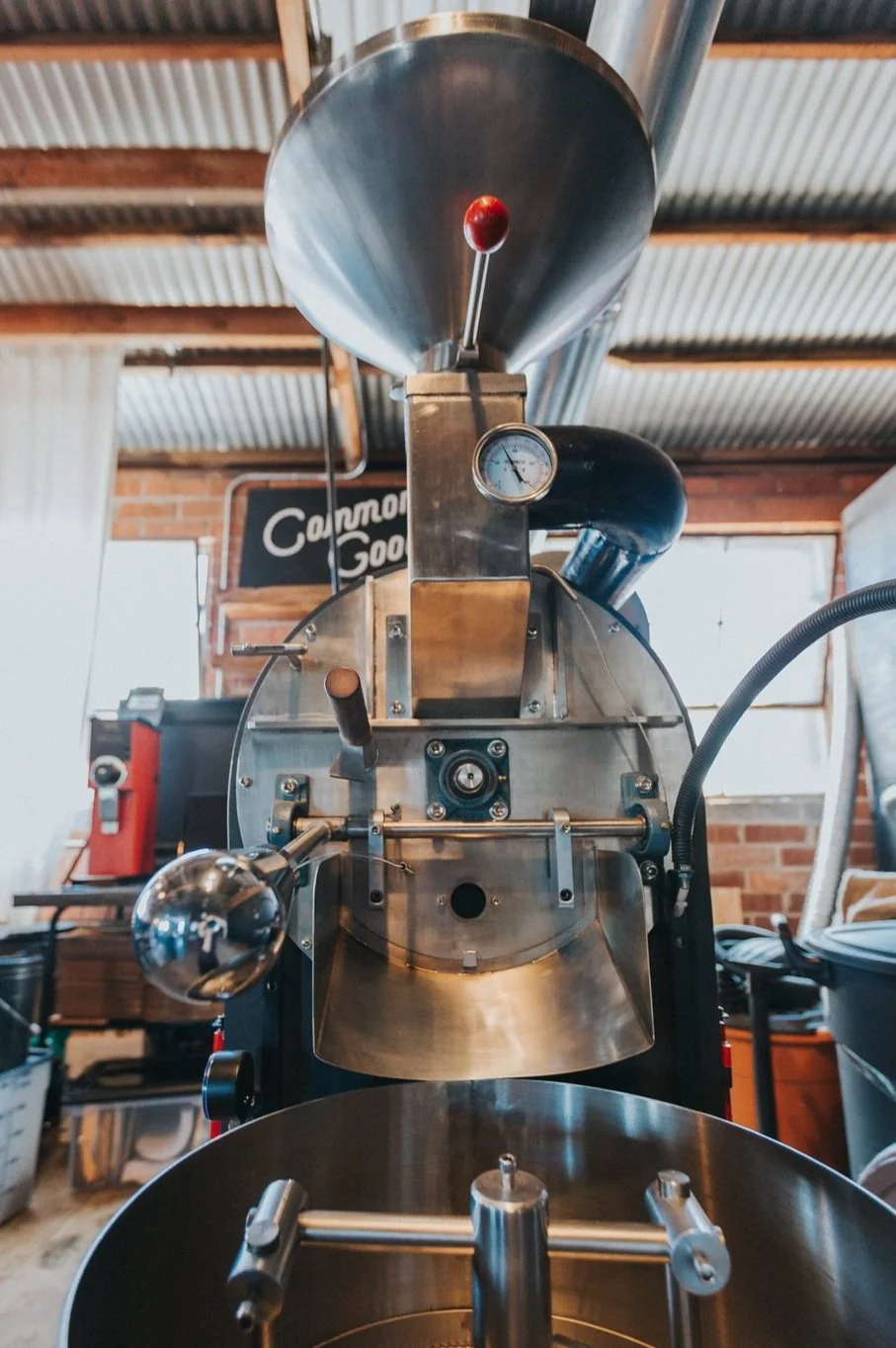
For CGC, roasting is more than a process; it symbolizes a commitment to quality and positive change. Their careful selection of green coffee beans and small-batch roasting technique bring out the nuanced flavors of each origin, creating a sensory experience that connects drinkers to the regions where the beans were grown.
CGC's focus on fair compensation for producers reflects its dedication to sustainability and equitable practices. The company’s story is one of conscious capitalism and social responsibility, aligning with consumers' desire for products that match their values.
As part of the global coffee community, CGC actively contributes to positive change through its philanthropic efforts, inviting patrons to join in making a difference.
In summary, Common Good Coffee Roasters is more than a brand; it’s a movement to redefine the coffee experience, elevate quality standards, and promote a better world. Through meticulous sourcing, a commitment to specialty coffee standards, and ethical practices, CGC invites everyone to participate in creating a positive and sustainable future—one cup of coffee at a time.
Transparency: An Interview With Cedro Alto
Last month we had an Instagram Live Q&A with Karl Weinhold from Cedro Alto - the coffee collective where we souce most of our Colombian coffees. We focused on supply-chain transparency and why/how we should care.
Last month we had an Instagram Live Q&A with Karl Weinhold from Cedro Alto - the coffee collective where we souce most of our Colombian coffees. We focused on supply-chain transparency and why/how we should care. We attempted to cover a lot of ground but my main take-away was that there are no simple answers, however if we care about where our coffee comes from and making sure it is good for all involved, we need to pay attention to some serious details.
Interview Notes:
Why and How can we Care about Supply Chain Transparency?
Transparency only matters if a coffee source (importer, collective, roaster, shop) claims to be focused on altruism (common good) in their coffee dealings. If this is something we truly care about we need some serious information:
What does fair mean to us? What is the actual price paid to farmers? In what currency? Milled or Green?
What is the difference between Direct and Fair Trade?
Fair Trade is a 3rd-party verified certification that sets a price floor for coffee (minimum price paid to farmers).
Fair Trade is only as good as a farmers ability to market and sell their coffee customers willing to pay a higher price.
The minority of Fair certified coffee is sold as actual Fair Trade price, due to consumer demand and the “C Price” (the price that coffee as a commodity is traded at).
Direct Trade isn’t a certification, it’s a term that implies the cutting-out of middlemen but it has been used in many different ways.
What do we mean by Direct? Farmer to Importer to Roaster? Farmer to mill to logistics company to roaster? Does the farmer plant, harvest, mill, ship, finance, roast, brew, and sell direct to consumers?
Cutting out intermediaries isn’t always a good thing.
There are many steps from seed to cup so many special skills and a lot of money is required to make this process happen.
Why shouldn’t whoever can do each process most efficiently, handle that work?
Only the largest and most capitalized companies can afford to be truly direct trade.
Why can I find coffee labeled Fair Trade and/or Organic for so inexpensive?
Scale- Large operations can afford to finance, hold, and coordinate in ways that allow them to cut cost overall and get guaranteed sales on a huge scale.
Creative blending of multiple origins
The question is: Will the coffee you love be available in 1, 2, or 5 years if farmers are selling coffee, often at a loss, to compete with commodity prices.
What part of Cedro Alto’s work are you most proud of?
We offer our farms a purchase-guarantee for a fixed price
This takes much of the financial risk and stress off the shoulders of farmers as Cedro Also pays up-front with very little buyer-guarantees.
What can we as roasters and cafe owners do better?
Plan purchasing of green coffee ahead of time so collective/farmers can count on our money.
Keep in contact and coordinate with importers and farmers in regards to green coffee demand. Price volatility is the most significant hurdle and hardship for coffee farmers.